
International Move: Costs, Timeline & Step-by-Step Guide

An international move is one of the most complex projects most people will ever take on. It’s not just packing boxes — it’s shipping schedules, customs regulations, import duties, visas, and a hundred small decisions that all have to line up across two countries and, often, two languages. Get the planning right and it feels smooth. Get it wrong and you’re staring at a shipment stuck in port, an unexpected duty bill, or a house full of furniture that arrived six weeks late.
This guide walks you through everything an international move involves: what it costs, how long it takes, the paperwork you can’t skip, how to choose the right shipping method, and how to pick a mover you can actually trust. Whether you’re relocating for work, family, or a fresh start, here’s how to do it without the stress.
What counts as an international move?
An international move — sometimes called international moving, moving abroad, or an international relocation — is any household or personal move that crosses a national border. That border is what changes everything. A domestic move is a logistics problem. An international move is a logistics problem plus a compliance problem: every country has its own customs rules, its own list of restricted items, and its own paperwork.
That’s why an overseas move needs more lead time, a bigger budget, and a partner who understands both ends of the journey — not just how to load a truck.

How much does an international move cost?
There’s no single price for an international move, because the total is built from several moving parts. As a rough guide, a full household relocation typically lands somewhere in the low-to-mid five figures, but your actual cost depends far more on the details below than on any headline number.
The main cost drivers are:
- Volume — how much you’re shipping. More belongings mean more container space and handling. This is the single biggest lever you control.
- Distance and destination — longer routes and destinations with complex customs procedures cost more.
- Shipping method — ocean freight is the budget option; air freight can be several times more expensive but far faster.
- Services — full-service packing, storage, insurance, and door-to-door delivery each add to the total.
- Customs duties and taxes — these are set by your destination country, not your mover, and vary widely.
- The “hidden” extras — port fees, local delivery from the port, temporary accommodation, visa fees, and living costs for your first weeks abroad.
| Shipment size | What it usually covers | Cost driver to watch |
|---|---|---|
| Studio / 1 bedroom | A few boxes to a shared container (LCL) | Whether you fill a full container or share one |
| 2–3 bedrooms | A dedicated 20-ft container | Destination customs complexity |
| 4+ bedrooms / villa | A 40-ft container, sometimes more | Volume — this is where costs climb fastest |
The single best way to cut costs: ship less. Anything that’s cheap to replace at your destination is often cheaper to sell or donate than to ship. Reserve the container space for what genuinely matters — the things that would be expensive, difficult, or impossible to replace.
The only way to get a real figure is a personalised quote based on your actual inventory and destination. Always ask a mover to explain exactly how they calculated it, so you can compare like for like.

How long does an international move take?
Two timelines matter, and people often confuse them.
Shipping time is how long your belongings spend in transit once they leave. Ocean freight to Europe typically runs 3–6 weeks; longer routes to Asia or Oceania can take longer. Air freight usually arrives within one to two weeks. A customs inspection at either end can add days or even weeks.
Planning time is how far ahead you should start — and this is where most people underestimate. A common myth is that a few months is enough. For a straightforward, employer-supported move it can be. But if you’re managing visas, housing, and logistics independently, start at least three to six months out, and earlier for complex destinations or if children’s school placements are involved (many international schools take applications a full academic year ahead).
Your international move timeline
Here’s a simple phased checklist to keep the whole move on track.
3–6 months before
- Research your destination’s visa, residency, and import rules
- Request quotes from two or three licensed international movers
- Book a pre-move survey to lock in your shipment scope
- Start decluttering — decide what ships, what’s sold or donated, and what’s stored
2 months before
- Confirm your mover and shipping method
- Begin gathering customs documents (see below)
- Sort out housing, schools, and healthcare at your destination
- Notify banks, insurers, and subscriptions of your move
1 month before
- Finalise your shipment inventory
- Arrange insurance for your belongings in transit
- Plan your arrival logistics — airport transfer, temporary accommodation, connectivity (an eSIM is handy for day one)
- Set aside passports, medications, valuables, and essentials to travel with you, not in the shipment
Final week & moving day
- Pack your carry-on essentials for the first few weeks abroad
- Do a final walk-through and confirm the delivery contact at your destination
- Keep all documents together and accessible
On arrival
- Clear customs (your mover should guide or handle this)
- Inspect your shipment on delivery and note any issues immediately
- Unpack essentials first, then settle in
Shipping methods compared
Choosing how your belongings travel is mostly a trade-off between cost and speed.
| Method | Speed | Cost | Best for |
|---|---|---|---|
| Ocean freight (FCL) — your own full container | Slower (weeks) | Most cost-effective for large loads | Full households, 2+ bedrooms |
| Ocean freight (LCL) — shared container | Slower + consolidation time | Cheaper for small loads | Studios, partial shipments |
| Air freight | Fast (days) | Highest per kg | Urgent items, small high-value shipments |
| Combination | Mixed | Balanced | Ship essentials by air, the rest by sea |
Most families use a combination: ocean freight for the bulk of their household goods, and air freight for the handful of things they need immediately on arrival.
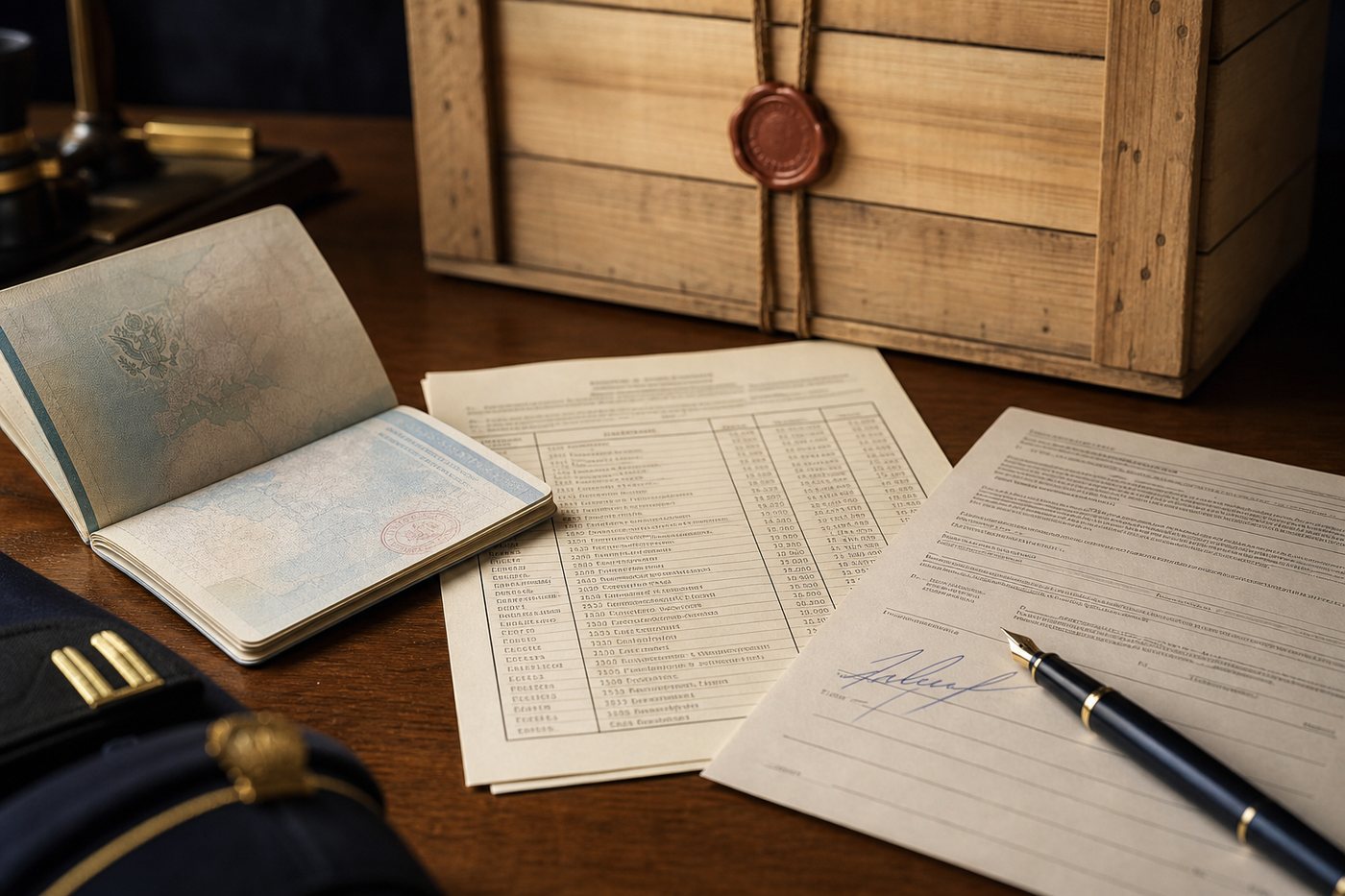
Customs, documents & compliance
This is the part people underestimate most — and the part that causes the delays, fines, and headaches. Every country sets its own rules, but for most international moves you’ll need:
- A detailed inventory of everything you’re shipping
- Passport copies and your visa or residence/work permit
- A signed declaration that your goods are used personal belongings (not new items for resale)
- Sometimes proof of residence at your destination
Most countries also restrict or ban certain items — commonly food, plants, medications, and electronics that don’t meet local safety standards. And many charge import duties or taxes based on the declared value of your goods, or require an inspection before releasing your shipment.
Customs is exactly where destination-specific expertise earns its keep. Rules differ not just country to country but sometimes shipment to shipment, and a single paperwork error can hold your belongings at the border. The safest approach is to work with a mover who handles customs clearance as part of the service and knows the specific requirements of your destination — France’s rules are not Germany’s, and neither are the UK’s.
How to choose an international moving company
Choosing the right partner is the most important decision of the whole move. A good one saves you money, time, and a great deal of stress. Here’s what to look for:
- Proven international experience and a strong reputation for handling overseas moves
- Proper licensing and certifications — verify them, don’t take them on trust
- Transparent, itemised quotes you can compare like for like
- Real customs guidance, not vague reassurance
- Insurance options for your belongings in transit
- Local presence on both ends — people on the ground who know the destination
- Clear communication and genuine reviews from past customers
Red flags: quotes that seem suspiciously low, vagueness about customs and duties, no proof of licensing, pressure to book immediately, or reluctance to explain how a price was calculated.
How Reloship does it differently
At Reloship, we handle international moves across 120+ countries with a model built on three things: cutting-edge technology, watertight systems and compliance, and genuinely local people on the ground. Wherever you’re moving, you get the same standard of care — human, local, and tailored to your situation. That combination of global reach and local expertise is what keeps your move on schedule and your belongings out of customs limbo.
If you’re planning a move, get a personalised quote and we’ll walk you through exactly what to expect — costs, timeline, and paperwork — for your specific destination.
Frequently asked questions
How much does it cost to move internationally?
It depends on how much you ship, where you’re going, and which shipping method you use. Volume and destination are the biggest factors. The only accurate figure comes from a personalised quote based on your actual inventory — always ask the mover to explain how they reached it.
What’s the cheapest way to move internationally?
Ocean freight, especially if you share a container (LCL) or fill your own (FCL) rather than paying for air freight. The bigger saving, though, is shipping less: sell or donate anything that’s cheap to replace at your destination.
How far in advance should I plan an international move?
Start at least three to six months ahead, and earlier for complex destinations or if you’re arranging visas, housing, and school placements yourself. Employer-supported moves can move faster.
Do I have to pay customs duties on my belongings?
Often, yes — many countries charge duties or taxes based on the declared value of your goods, and these are set by the destination country, not your mover. A signed declaration that your items are used personal belongings can reduce or waive them in some cases.
Sea freight or air freight — which should I choose?
Sea freight for the bulk of your household goods (cheaper, slower). Air freight for anything you need immediately or that’s small and valuable (faster, pricier). Most people combine both.
What can’t I ship in an international move?
It varies by country, but food, plants, medications, and certain electronics are commonly restricted or banned. Check your destination’s rules early — or use a mover who does it for you.
Should I handle customs clearance myself?
It’s possible but risky. Mistakes cause delays and fines. Most people use an international mover who includes customs clearance in their service, so the paperwork is handled correctly the first time.
Planning an international move? Reloship makes it simple across 120+ countries — human, local, and tailored to you. Get your personalised quote today.